
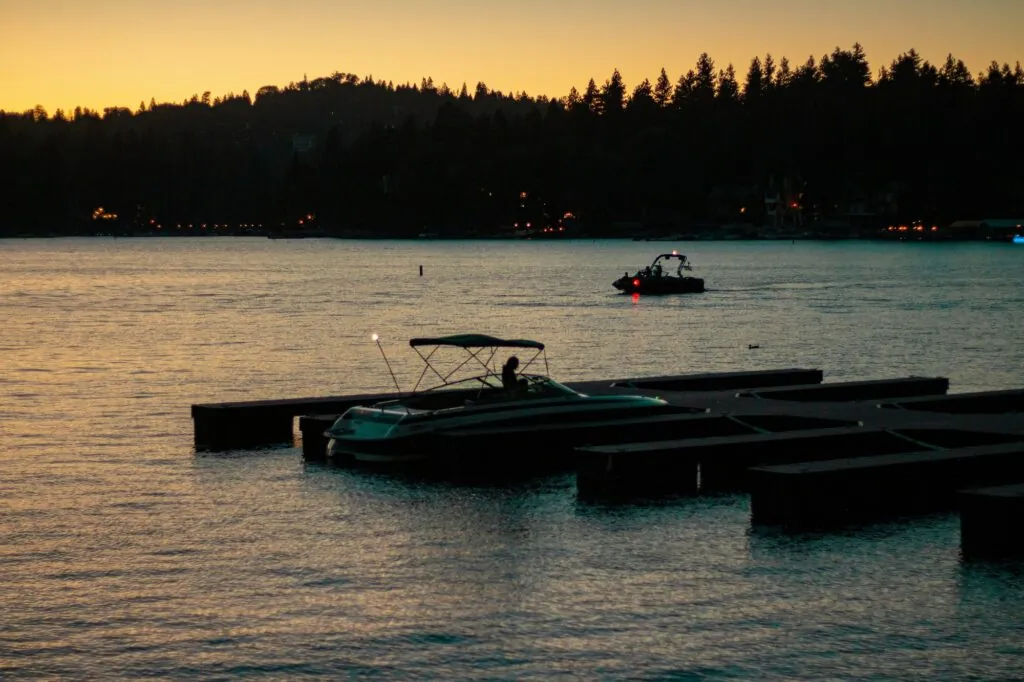
Representative stock image. Photo by Gabriel Menchaca on Unsplash.
A relative asks to take the pontoon out while you finish lunch. Someone else wants the personal watercraft for a quick ride, and the kids are carrying a tube toward the dock. For a lakeshore owner, handing over the keys can change several things at once: the operator, the activity and who is using the waterfront.
A useful insurance review starts with that ordinary handoff. Describe what actually happens at your shoreline rather than asking only whether the boat is insured.
Know who can take the boat without you
Make a short operator list before the next cabin weekend. Include family members who visit often, adult children who use the cabin independently and friends who occasionally borrow a watercraft. Note whether you will be aboard.
Then ask your agent how the policy treats each situation. Travelers explains that its boat policies may offer protection for occasional permitted operators, subject to policy terms. That is an insurer-specific example, not a rule for every boat policy. Confirm who needs to be listed and whether any operator restrictions apply to yours. Travelers boat insurance FAQ
The question also runs in the other direction. If a neighbor lends you a fishing boat, do not assume your own boat policy or cabin policy follows you into it. Ask about nonowned-watercraft coverage and what it does, and does not, protect. Borrowing permission and insurance permission are separate conversations.
Treat the shoreline as a launch zone
The busiest part of a ride may be the departure. Swimmers, a moored pontoon, a paddleboard and someone stepping down the dock ladder can all be close together. Establish a departure and return routine that keeps swimming and powered-watercraft movements apart.
For personal watercraft, Minnesota's rules specifically address this space. The DNR's 2026 guide requires slow no-wake operation within 150 feet of docks, swimmers, swim rafts and certain watercraft. It also requires compatible, approved life jackets for PWC riders and sets operating hours. Review the guide's shoreline-launch exception, towing rules, operator requirements and local restrictions before use. Minnesota DNR 2026 Boating Guide
Show a borrower the actual approach, not just the controls. Point out shallow areas and the swimming space. Agree on where passengers board, where the engine is shut down and what to do if weather changes. A familiar lake does not make every guest familiar with your dock.
Name the tow sports and the gear
Tell your agent whether guests tube, water-ski, wakeboard or wakesurf. Ask how liability and medical-payments provisions apply to participants, passengers and other people nearby. Identify any excluded activities rather than relying on the phrase recreational use.
Coverage descriptions can distinguish closely related activities. Progressive, for example, describes water-sports coverage for several towing activities but excludes parasailing, kiteboarding and other activities involving people pulled through the air. Your own policy's forms and endorsements control. Progressive boat coverages
Make a second list for equipment: towable tubes, skis, ropes, electronics, fishing gear and items belonging to guests. Ask which items are insured, under which coverage, with what limits and deductibles, and whether their location matters. Gear in a dock box may raise different questions from equipment attached to the boat. Keep photos, receipts and ownership notes with your inventory.
Separate the boat from the dock and lift
A single windstorm can affect the boat, dock and lift, but that does not make them one insured item. Progressive notes that boat policies usually do not insure an owner's dock; a homeowners policy may treat a dock as another structure or personal property, depending on the insurer and dock. Progressive on boat dock insurance
Ask specifically about your removable dock, floating sections, lift, canopy and off-season storage. Request an explanation of covered causes of loss, exclusions and valuation. Do not assume a boat's physical-damage coverage pays to repair the structure holding it, or that liability coverage pays for damage to your own property.
Bring a handoff checklist to your review
Before lending the keys, gather:
- Each watercraft's owner, model, motor size and policy information.
- Regular and occasional operators, including those using it without you.
- Tow sports and any guest-owned equipment used with the boat.
- Photos and values for the dock, lift and stored gear.
- Questions about boat liability limits and any umbrella requirements.
For a review grounded in how your shoreline is used, contact David Olson at Intrinsic Insurance, 952-314-9446. Coverage availability and eligibility depend on the insurer, underwriting and the actual policy; a homeowners policy or umbrella should never be assumed to fill a watercraft gap.

 One of the things that sets Intrinsic Insurance apart is our commitment to our customers. We believe that insurance should be easy to understand and easy to use, and we strive to make the process as smooth and stress-free as possible. Our agents take the time to get to know our customers and their unique needs, so we can provide personalized coverage that meets their specific requirements. Over time, we’ve earned a reputation for exceptional customer service and expertise in the insurance industry, real estate, and construction. We’re proud to have a team of experienced agents who are dedicated to providing our customers with the highest level of service and support. Our agents are knowledgeable, friendly, and always available to answer questions or help our customers file a claim.