
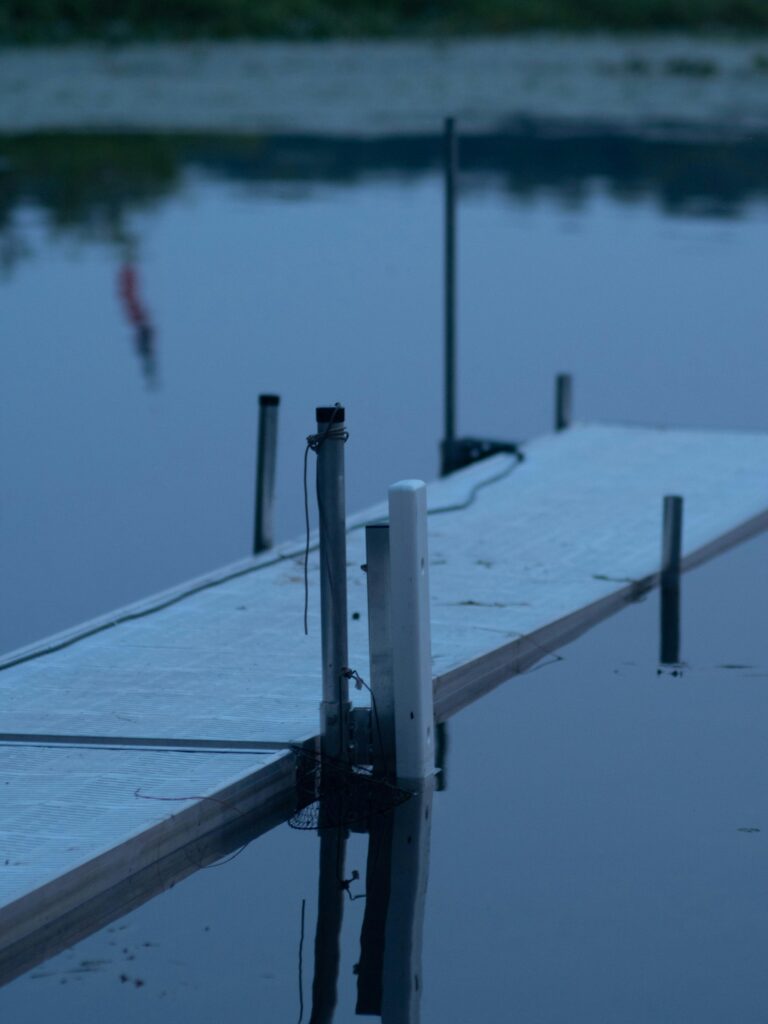
Representative stock image. Photo by Gio Bartlett on Unsplash.
Pull-out day is a useful insurance deadline. The dock sections are still assembled, the lift's label is accessible, and you can photograph the whole shoreline setup before it moves into winter storage. That is a better starting point than trying to remember every component after something is damaged.
A lakeshore review should give the dock, lift and boathouse their own attention. Calling all three “the dock” can hide important differences in ownership, construction, location and coverage.
Inventory the shoreline in separate pieces
Create one entry for each major item: fixed or removable dock, swim platform, boat lift, lift motor, canopy and boathouse. Include the manufacturer, model, approximate age, dimensions and purchase records where available. Photograph equipment labels, connections and the overall installation from shore.
For a boathouse, add its construction details and a separate list of what stays inside. A building, a boat stored in it and removable gear are different subjects for a coverage discussion. Do not assume one limit addresses the entire package.
Obtain a current repair or replacement estimate for expensive equipment. Ask the supplier to distinguish the equipment price from delivery, installation and removal work. You can then ask the agent which expenses the policy would consider following a covered loss, rather than assuming the retail price is the complete number.
If equipment is shared with relatives or neighboring owners, document who owns which parts and who maintains them. Bring that arrangement to the insurance review.
Confirm how each item is classified
Some docks may fall under other-structures coverage; seasonal removable docks may instead be treated as personal property. Ownership, location and policy wording matter. American Family's dock-coverage explanation describes these possible differences, but your cabin's policy needs its own review.
Ask the agent to identify the policy section or endorsement for every inventory entry, including the lift and canopy. Ask whether any limit is shared with the detached garage, shed or other property. Review the deductible and whether a covered settlement would use replacement-cost terms, depreciation or another valuation provision.
Also ask whether a separate option is available if the existing cabin policy does not address the equipment as intended. Finding a coverage heading is only the beginning; the causes of loss and exclusions still need review.
Review specific damage scenarios
Use questions that match a Minnesota shoreline: a tree falls onto the dock, wind damages the canopy, waves move a section, rising water damages supports, or moving ice crushes the lift.
Do not assume that a reference to wind coverage settles a loss involving waves or water. Progressive identifies freezing, thawing, water and ice weight, flooding and certain collapse losses among dock-coverage exclusions to examine. Its dock-insurance overview also notes that boat policies generally do not insure the dock itself. Have the agent explain the applicable wording for your setup rather than relying on the boat's coverage.
Ice deserves its own question. The Minnesota DNR describes how expanding lake ice can push against shore and damage docks, boat lifts and other property in its ice-damage guidance. A sturdy-looking installation is not a reason to skip the discussion, and an insurance review is not a substitute for an appropriate removal and storage plan.
Follow the equipment into winter storage
Before the removal crew arrives, make this short checklist:
- Record the scheduled pull-out date and photograph the equipment's condition.
- Identify where each item will spend winter, including any off-site storage address.
- Ask how coverage applies during removal, transport, storage and spring installation.
- Ask the service provider about its insurance and responsibility for accidental damage; keep the contract.
- Follow manufacturer and qualified service-provider instructions for securing and storing components.
- Save the final invoice and photos showing where the equipment was placed.
These steps help make the seasonal move part of the review instead of leaving it as an assumption.
Boathouses need an additional planning question before repairs or reconstruction. The Minnesota DNR's permit guidance directs owners to local planning or zoning officials for on-land boathouse projects and to the DNR regarding repairs to existing in-water structures. Confirm the applicable requirements before assuming a damaged structure can simply be rebuilt in the same way. Ask separately whether the policy addresses any resulting ordinance or code-related costs.
To review the inventory alongside your cabin coverage, call David Olson at Intrinsic Insurance, 952-314-9446. Photos, equipment estimates and storage details can make that conversation much more useful.

 One of the things that sets Intrinsic Insurance apart is our commitment to our customers. We believe that insurance should be easy to understand and easy to use, and we strive to make the process as smooth and stress-free as possible. Our agents take the time to get to know our customers and their unique needs, so we can provide personalized coverage that meets their specific requirements. Over time, we’ve earned a reputation for exceptional customer service and expertise in the insurance industry, real estate, and construction. We’re proud to have a team of experienced agents who are dedicated to providing our customers with the highest level of service and support. Our agents are knowledgeable, friendly, and always available to answer questions or help our customers file a claim.