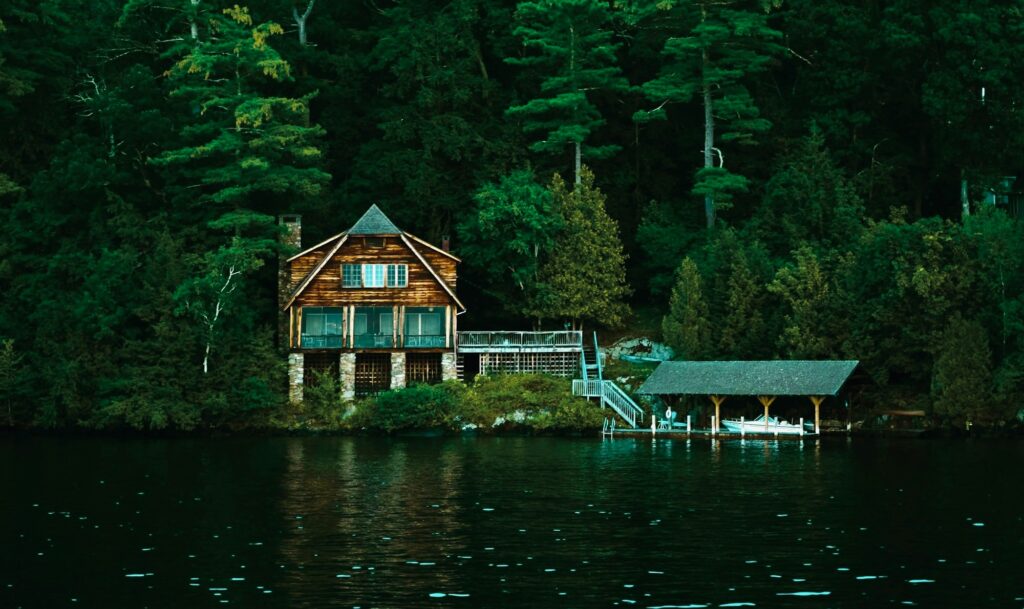
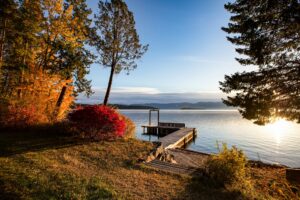
Representative stock image. Photo by Akshat Sharma on Unsplash.
Walk the route from the public road to your cabin before your next insurance review. Could a delivery truck make the turn? Where would a dumpster sit? How would a crew reach the lake-facing wall without crossing a steep slope or damaging a septic system?
Those details deserve a place beside square footage and interior finishes when discussing reconstruction. A modest Minnesota cabin can present a complicated worksite. The goal is to help your agent understand the building and the practical work required to rebuild it, rather than base the conversation on its sale price or the value of the lakefront land.
Start with the route a construction crew would use
A driveway that works for a family vehicle may present different questions for loaded trucks, equipment and repeated deliveries. Make a simple access sketch and photograph the tight spots. Include a shared lane, gate, bridge, sharp turn, overhead branches and any place where vehicles cannot easily pass or turn around.
For a steep lot, show the distance and elevation change between the parking area and the cabin. Ask a reconstruction contractor what those conditions could mean for unloading materials, moving equipment and reaching foundations or exterior walls. Do not assume equipment could travel across a neighbor's property or down the shoreline.
Chubb's explanation of reconstruction costs identifies limited site access, specialized work and contractor availability among the reasons rebuilding can differ from an original construction project. For a lakeshore owner, that is a reason to describe the actual route and terrain, not to apply a guessed percentage increase to a dwelling limit.
Ask for an estimate that addresses the worksite
Request a conversation about the assumptions behind the insurer's reconstruction estimate. If the property has unusual access or construction, ask whether a more detailed assessment would be useful.
A contractor's written observations can help make the questions concrete:
- Deliveries and staging: Where could lumber, roofing and equipment be stored without blocking the only access road?
- Demolition and debris: Could containers reach the building, or would material need another handling method? Where would loading take place?
- Specialized work: Would the project require expertise with a hillside foundation, timber construction, unusual masonry or custom windows?
- Protection during work: How would crews protect the remaining building, septic area, neighboring property and shoreline?
- Scheduling: Are there practical limitations on when heavy equipment can reach this particular site?
Ask the contractor to separate observed conditions from assumptions that still need confirmation. A photo of a narrow lane helps; a note explaining why a proposed equipment route will not work is more useful.
Then ask your agent how demolition, debris removal, professional fees and any applicable additional limits are addressed in the proposed policy. A construction estimate identifies potential expenses. It does not establish that every expense is insured.
Check rebuilding permission and code questions separately
An older cabin close to the water deserves an early call to local planning and zoning. Ask what records exist for the building, whether it is legally nonconforming, and what review could apply after serious damage. Do not assume a familiar footprint can automatically be recreated.
The Minnesota DNR's shoreland guidance directs owners to local zoning authorities and notes that local ordinances can be more restrictive than statewide standards. Request information for your parcel rather than relying on what another owner rebuilt across the lake.
Insurance questions also need Minnesota-specific care. Minnesota Statutes section 65A.10 addresses minimum-code rebuilding under replacement-cost insurance, subject to applicable policy limits, and distinguishes damaged portions in a partial loss. Ask your agent to explain how the policy addresses required work on damaged and undamaged portions, any ordinance-or-law provisions, and relocation required by zoning. Avoid assuming either that every upgrade is excluded or that every rebuilding requirement will be paid.
Build a short field packet for your insurance review
Before calling, collect current exterior photographs, the access sketch, building measurements, renovation records and any survey or site plan you already have. Identify detached structures separately so a lakeside sauna or garage does not disappear into a general description of the cabin.
Add three questions to the front of the packet: Does the reconstruction estimate reflect this site's access? Which worksite expenses are included in the estimate? Which policy limits or conditions could affect payment after a covered loss?
Revisit the packet after an addition, major finish upgrade or meaningful access change. If you would like to review those questions with an insurance agent, contact David Olson at Intrinsic Insurance at 952-314-9446. Bring the property details and the current policy so the conversation can focus on your particular lakeshore setting.

 One of the things that sets Intrinsic Insurance apart is our commitment to our customers. We believe that insurance should be easy to understand and easy to use, and we strive to make the process as smooth and stress-free as possible. Our agents take the time to get to know our customers and their unique needs, so we can provide personalized coverage that meets their specific requirements. Over time, we’ve earned a reputation for exceptional customer service and expertise in the insurance industry, real estate, and construction. We’re proud to have a team of experienced agents who are dedicated to providing our customers with the highest level of service and support. Our agents are knowledgeable, friendly, and always available to answer questions or help our customers file a claim.