
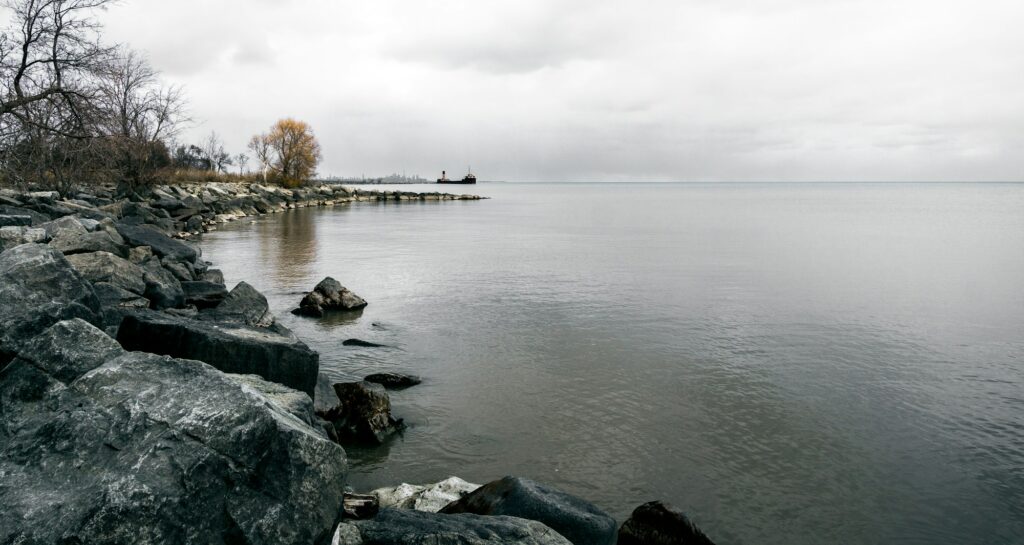
Representative stock image. Photo by Warren on Unsplash.
A tree across the cabin steps, water inside a lakeside room and a newly exposed bank may all follow the same storm. They still need separate descriptions when you ask about insurance and plan repairs.
For Minnesota lakeshore owners, the first useful task after checking safety is to create a simple damage map. Record what happened to each building, access route and waterfront feature. That gives your insurer and the appropriate local professionals clearer information than a single description of “storm damage.”
Begin with safety and a record of the whole property
Keep people away from downed utility lines, unstable trees and visibly damaged banks or structures. If access is unsafe, do not enter simply to get photographs. Let the appropriate emergency, utility or property professional address the hazard.
From safe locations, photograph the property in wide views, then record individual damaged areas. Note the date you discovered the damage, whether anyone saw it happen and whether the cabin had been unoccupied. Describe observations without guessing at hidden damage or assigning a cause you cannot verify.
The Minnesota Department of Commerce's residential claim guidance recommends prompt reporting, documenting damage before cleanup, preserving damaged property for the adjuster and making only necessary temporary repairs while awaiting instructions. Keep receipts and a communication log. Ask the insurer what documentation it needs before emergency work changes the scene.
Map fallen trees by what they struck or blocked
Create a separate entry for each fallen tree or large limb. Did it strike the cabin, a detached sauna, a dock or nothing at all? Did it block the only driveway? Is the problem a fallen tree, or a standing tree that now appears unsafe?
Those distinctions can matter. Farmers' tree-removal guidance explains that removal may be covered when a tree damages an insured structure, while preventive removal and trees that fall without damaging insured structures are generally treated differently. Some policies also address a blocked driveway. The actual policy and circumstances control.
Before authorizing a large cleanup, ask the insurer which parts of the work it needs itemized. A tree contractor's estimate might distinguish removal from a damaged structure, access clearing, hauling and work on remaining hazardous trees. Keep the categories separate rather than treating an entire wooded lot as one insured cleanup project.
Describe water by its entry point and visible path
For each wet area, record where water was first noticed and any visible route it took. Photograph water marks, openings, wet contents and conditions outside, where safe. Tell the adjuster if lake water rose, runoff crossed the lot, a drain backed up or the cause remains uncertain. Several sources of water can be present at the same property.
FEMA's flood-insurance buying and coverage guidance explains that most homeowners insurance does not cover flood damage. It also lists NFIP exclusions for certain property outside the insured building, including landscaping, decks and septic systems. A flood policy should therefore be reviewed separately from the cabin policy, without assuming it protects every waterfront feature.
Ask each insurer which policy should receive notice and what evidence it needs. Do not label every wet surface a flood loss, or assume every rain-related loss belongs under homeowners coverage. Let the facts and policy definitions guide that assessment.
Treat a changed shoreline as its own repair question
Add a shoreline section to the map: exposed roots, missing soil, displaced rock, damaged stairs, an undermined landing or a changed bank edge. Photograph from stable ground. Compare with older property photographs if available, and make clear which changes are newly observed rather than confirmed storm damage.
Before ordering rock or reshaping the bank, speak with local zoning staff and the appropriate shoreline professional. The Minnesota DNR's riprap guidance explains that permit requirements depend on the work and that natural alternatives may be appropriate. Work below the ordinary high water level and local requirements both deserve attention.
Ask the insurer to distinguish damage to insured structures from lost soil or proposed bank stabilization. Do not assume erosion is insured simply because it appeared after a storm, or decide a complicated shoreline collapse is excluded without asking for a policy-based explanation.
Turn the map into a coordinated next step list
For each item, write down the immediate hazard, temporary protection needed, insurer contact and professional who should evaluate permanent repairs. At a seasonal cabin, designate someone who can meet an adjuster safely and provide access instructions without authorizing unreviewed work.
Keep emergency work, building repairs, tree services and shoreline proposals in separate folders. You can then discuss the scope of each job without losing track of unresolved coverage or permit questions.
For a review of how your current cabin coverage addresses these different exposures, call David Olson at Intrinsic Insurance, 952-314-9446. A useful conversation starts with your damage map, photographs and policy documents, not an assumption that one storm creates one coverage answer.



 One of the things that sets Intrinsic Insurance apart is our commitment to our customers. We believe that insurance should be easy to understand and easy to use, and we strive to make the process as smooth and stress-free as possible. Our agents take the time to get to know our customers and their unique needs, so we can provide personalized coverage that meets their specific requirements. Over time, we’ve earned a reputation for exceptional customer service and expertise in the insurance industry, real estate, and construction. We’re proud to have a team of experienced agents who are dedicated to providing our customers with the highest level of service and support. Our agents are knowledgeable, friendly, and always available to answer questions or help our customers file a claim.